2026 Best Gas for TIG Welding Buyers Guide?
Choosing the best tig welding gas in 2026 is not simply a matter of buying pure argon.
The correct choice depends on metal type, thickness, amperage, torch design, and workshop conditions. Stainless steel may need a carefully controlled argon mix. Aluminum usually demands clean argon and stable gas coverage. Helium can increase heat input, but it also raises cost and demands tighter control. Small differences matter. A pale tungsten tip, porous bead, or gray aluminum surface may signal poor shielding.
Jody Collier, a respected TIG welding educator, puts it clearly: “Shielding gas is one of the most important parts of TIG welding.” His point matches practical shop experience. Gas selection affects arc stability, penetration, tungsten life, and finished appearance. It also affects how quickly a beginner recognizes mistakes.
This 2026 Best Gas for TIG Welding Buyers Guide examines common options, including pure argon, helium, and argon-helium blends. It compares performance, material compatibility, cylinder cost, flow-rate behavior, and real workshop value. The guide also considers regulators, gas lenses, drafts, and post-flow settings. Those details are easy to overlook.
They should not be.
A laboratory result may not match a windy garage or a poorly maintained torch. I have seen welders blame the filler rod when the real problem was contaminated shielding gas. That assumption is understandable, but incomplete. There is no universal winner. The best tig welding gas is the one that suits your material, equipment, skill level, and working environment. Even this guide has limits, and careful testing remains necessary.
Understanding Shielding Gas Requirements in TIG Welding
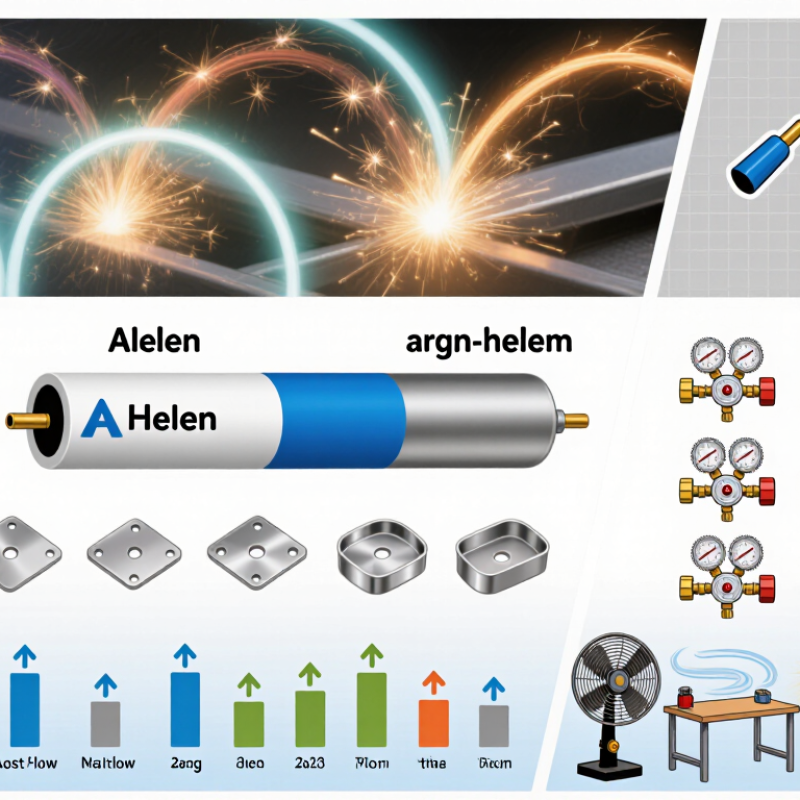
For 2026 TIG welding, the best shielding gas depends on the metal, joint design, and heat required. Pure argon remains the practical baseline for steel, stainless steel, aluminum, and titanium. It starts easily and produces a stable arc at lower amperage. ISO 14175 classifies argon and helium as inert shielding gases, supporting consistent gas selection across industrial procedures.
Gas flow matters as much as gas type. A common starting range is 15–25 cubic feet per hour, but drafts, cup size, and torch position can change the requirement. Too little flow exposes the weld pool to oxygen. Too much flow creates turbulence and may pull air into the arc. That mistake is surprisingly common.
Helium adds heat and can improve travel speed on thick aluminum or copper. NIST lists helium’s density at about one-tenth of argon’s, so helium behaves differently around the weld zone. It may also require higher flow rates. The AWS Welding Handbook describes argon-helium mixtures as useful when deeper penetration and faster welding are needed. Yet the extra heat can distort thin sheet. I have seen operators increase flow first, then discover the real problem was a leaking hose. Check fittings, purge lines, and the backside of the joint. Gas purity matters too; moisture or oxygen contamination can discolor stainless steel and weaken titanium welds. The choice is not always obvious.
Comparing Argon, Helium, and Mixed Gases for TIG Applications
For most TIG welding, argon remains the practical starting point. It provides a stable arc, reliable starts, and good control on thin stainless steel or aluminum. In a working shop, high-purity argon also reduces contamination around the tungsten and weld pool. A typical flow may be 10–18 liters per minute, but nozzle size and drafts change that number.
Helium produces a hotter arc and can increase travel speed or penetration on thick aluminum and copper. However, it costs more and may make arc starts less forgiving. Argon-helium blends often offer a useful middle ground. They add heat without making the puddle feel completely different. Hydrogen blends can improve speed on suitable stainless applications, but they require careful material selection and qualified procedures. More gas is not automatically better. Excessive flow can create turbulence and pull air into the shield.
Tips: Check the regulator, hose, fittings, and torch cup before blaming the gas. Purge the line briefly after changing cylinders. Keep the tungsten clean and the torch close. I once increased flow to fix porosity, but a leaking hose was the real problem. That mistake still influences my setup checks. Use the lowest stable flow that protects the weld, then verify results with a test coupon.
2026 Best Gas for TIG Welding Buyers Guide? — Comparing Argon, Helium, and Mixed Gases for TIG Applications
| Comparison Dimension | Pure Argon | Pure Helium | Argon–Helium Blend | Buying Guidance |
|---|---|---|---|---|
| Typical purity | 99.995% or higher for general TIG work | 99.995% or higher for welding applications | Usually supplied as a certified premixed shielding gas; verify the stated composition and purity | Choose welding-grade gas with a certificate or specification suitable for TIG shielding. |
| Arc-starting performance | Excellent; supports easy starts and a stable low-current arc | More difficult to start and maintain, especially at low current | Generally easier than pure helium; performance depends on the argon percentage | For thin sheet, frequent starts, or precision work, select argon or an argon-rich blend. |
| Arc voltage and heat input | Lower arc voltage and lower heat input at the same current | Higher arc voltage and substantially greater heat transfer | Higher heat than argon, with the increase controlled by helium concentration | Use helium or a helium blend when additional penetration or travel speed is required. |
| Recommended material range | Stainless steel, carbon steel, aluminum, copper, nickel alloys, and titanium | Aluminum, copper, thick sections, and heat-conductive materials | Aluminum, copper, nickel alloys, and thicker sections requiring increased heat | For general-purpose TIG work, argon provides the broadest material coverage. |
| Suitability for AC aluminum TIG | Excellent arc stability and reliable oxide-cleaning behavior | Provides high heat but may be less forgiving during starting and arc control | Can increase puddle fluidity, penetration, and travel speed when correctly adjusted | For most aluminum jobs, begin with argon; consider helium addition for thick or highly conductive parts. |
| Typical shielding-flow starting range | Approximately 6–12 L/min, depending on cup size, joint design, and drafts | Approximately 10–20 L/min; helium commonly requires higher flow than argon | Approximately 8–16 L/min, depending on helium percentage and torch setup | Use the flowmeter, gas lens, cup size, and workspace conditions to fine-tune the final setting. |
| Effect of excessive flow | Can create turbulence and draw surrounding air into the shielding zone | Higher risk of turbulence and unnecessary gas consumption at excessive flow | May cause unstable shielding if the flow is not matched to the blend and torch | More flow does not automatically improve protection; adjust until the arc and weld color are stable. |
| Weld penetration | Moderate and easy to control | High heat transfer can increase penetration and melting capacity | Moderate to high; increases with helium concentration | Select helium content based on required penetration, amperage limits, and distortion control. |
| Travel speed potential | Suitable for controlled, general-purpose travel speeds | Can support higher travel speeds on suitable thick or conductive materials | Can improve productivity while retaining better arc-starting behavior than pure helium | Productivity gains depend on joint fit-up, power source capacity, and operator technique. |
| Risk of tungsten contamination | Low when polarity, current, gas coverage, and arc length are correct | Higher process sensitivity because of greater heat and more demanding arc control | Intermediate; depends on helium percentage and operator settings | Use correct tungsten preparation, avoid touching the puddle, and maintain adequate post-flow. |
| Cost and availability | Usually the most economical and widely available option | Usually more expensive and may be less readily available | Typically costs more than argon; availability varies by gas supplier and blend ratio | Compare cylinder rental, refill, delivery, and consumption costs—not only the gas price. |
| Best overall use case | General-purpose TIG welding, thin materials, stainless steel, and precision fabrication | High-heat welding of thick aluminum, copper, and other heat-sinking materials | A compromise between argon’s stability and helium’s additional heat | Choose the gas according to material thickness, heat demand, process stability, and operating budget. |
| Overall buyer recommendation | Best default choice for most TIG applications | Best for specialized high-heat work | Best when extra heat is needed without fully giving up argon’s arc stability | When uncertain, start with pure argon and qualify any helium blend on representative test material. |
Note: Flow rates and performance ranges are typical starting points, not fixed production settings. Final selection should follow the welding procedure, material thickness, joint design, torch configuration, power source, and local safety requirements.
Matching Gas Selection to Metals, Thicknesses, and Welding Conditions
Choosing TIG shielding gas starts with the metal, not the cylinder label. Pure argon remains the practical baseline for carbon steel, stainless steel, and thin aluminum. It provides a stable arc and easy starts at moderate flow rates, often 8–12 L/min indoors. ISO 14175:2018 defines shielding-gas classifications, while the AWS Welding Handbook emphasizes gas purity and coverage as essential quality controls.
Aluminum and copper often need more heat than steel. A helium-argon mixture can increase arc energy and improve penetration on thicker sections. NIST gas-property data lists helium at a much lower density than argon, so flow settings can feel misleading. Increase flow carefully. Excessive flow may create turbulence and draw room air into the arc. That mistake is common.
Material thickness changes the decision. Thin stainless sheet usually benefits from argon and a smaller cup, while heavy aluminum may respond better to a helium blend and preheating. Outdoor work demands extra protection because wind quickly disrupts shielding. A simple windbreak can matter more than changing gas chemistry. The International Institute of Welding links shielding stability with reduced porosity and improved weld consistency in process guidance. I still verify every setting on scrap metal; published charts cannot predict every joint gap, torch angle, or contaminated surface. Gas economy matters too, but unstable coverage costs more than a few extra liters.
Evaluating Purity, Flow Rate, Cylinders, Regulators, and Costs
Choosing the best gas for TIG welding in 2026 starts with purity, not price. For most stainless steel, mild steel, and aluminum work, high-purity argon provides a stable arc and predictable shielding. A purity near 99.996% is commonly selected for demanding fabrication, but always check the material and procedure requirements.
Lower-quality gas can cause unstable arcs, gray welds, and tungsten contamination. Small leaks matter too. A loose connection may empty a cylinder overnight.
Flow rate must match the cup size, joint design, and workshop conditions. Excessive flow can create turbulence and pull air into the shielding area. In a sheltered shop, 15–20 CFH may be enough, while a large cup or light airflow may require more.
Helium can increase heat input, but its higher cost and different arc behavior need practice. I have seen welders adjust flow by instinct, then waste half a cylinder. A flowmeter or regulator with clear, accurate readings prevents that habit.
Cylinder choice affects both handling and operating cost. A smaller cylinder is easier to move but needs frequent refills. A larger cylinder reduces refill trips, though rental fees and storage space increase. Keep cylinders upright and secured.
Select a regulator rated for the gas and working pressure, with leak-resistant fittings. Compare refill prices, deposits, rental charges, delivery fees, and unused-gas loss. The cheapest cylinder is not always the cheapest weld.
Choosing the Best TIG Welding Gas for Specific Projects in 2026
The best TIG welding gas depends on the metal, thickness, joint design, and heat required. For general steel and stainless steel, high-purity argon remains the most dependable choice. It provides a stable arc, controlled starts, and a clean weld pool at moderate amperage. Use it for repair work, brackets, tubing, and precision fabrication.
Aluminum and copper often need more heat penetration. An argon-helium blend can increase arc energy and improve travel speed on thick sections. Helium costs more and may require careful flow adjustment. Too much flow can create turbulence, pulling air into the shielding zone. I have seen a beautiful arc produce porous welds because the cup was too small or the workshop had a strong draft.
Titanium demands exceptional shielding because hot titanium reacts quickly with oxygen. Use high-purity argon, generous post-flow, and a trailing shield when the joint remains hot. Some stainless and nickel alloys may accept specialized gas blends, but hydrogen-containing mixtures require strict process control and suitable equipment. They are not a casual upgrade. Check the cylinder specification, purity level, regulator condition, and applicable safety requirements before welding. Gas selection is only part of the result. Torch angle, tungsten preparation, surface cleaning, and actual flow rate can matter just as much. My own process reviews sometimes reveal that changing the gas was unnecessary; fixing contamination solved the problem.
Related Posts
-
What is a Laser Welding Machine and How Does it Work?
-

10 Best Robotic Welding Solutions for Enhanced Efficiency and Precision?
-
2025 Top Laser Marking Innovations for Enhanced Precision and Efficiency
-
What is a Handheld Welder and How Does It Work?
-

Top 10 Tips for Laser Welding Aluminum Effectively?
-
China Best Stainless Steel Welding Techniques for Quality Results?