How to Choose an Aluminium Laser Cutting Supplier in 2026
Choosing an aluminium laser cutting supplier in 2026 is not simply a search for the lowest price or fastest machine. A reliable partner should understand how alloy, thickness, surface finish, and part geometry affect the finished edge. A 2 mm panel and a 12 mm plate do not behave alike under the beam. Small details matter: burrs around a mounting hole, heat tint near a bend, or a scratched protective film can slow assembly later.
Laser-processing specialist William M. Steen’s published work offers a useful principle for buyers: process control matters more than headline machine power. This is a paraphrase, not a verbatim quotation. Ask suppliers how they manage focus, cutting parameters, material handling, and inspection. Request sample parts made from your actual aluminium grade and thickness. Check tolerances, edge quality, and repeatability—not just a polished photograph. Look for clear answers. Vague promises are a warning.
Compare more than hourly rates. Ask about nesting efficiency, minimum order quantities, lead times, revision handling, and how defects are documented. A capable supplier should explain what it can hold consistently and where your design may need adjustment. That conversation can reveal more than a brochure. Even then, one sample cannot prove every production run will be perfect; verify the process with a realistic trial order. The best choice is usually the supplier that communicates limits clearly, supports your inspection needs, and delivers dependable parts—not merely an impressive first cut.
Define Your Aluminium Laser Cutting Requirements
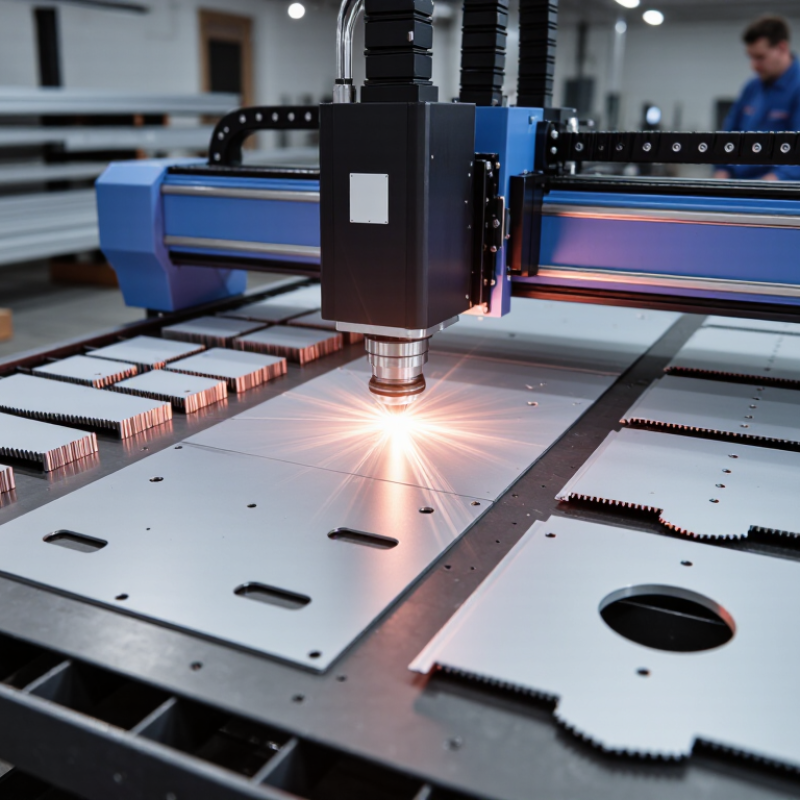
Before comparing suppliers, turn the part drawing into a clear cutting brief. List each aluminium alloy and temper, sheet thickness, maximum part dimensions, expected monthly volume, and required delivery format. Specify critical tolerances, hole sizes, edge condition, and whether parts need deburring or protective film. A 2 mm panel with visible edges has different priorities from a thick bracket hidden inside an assembly. Small details matter.
The International Aluminium Institute reported global primary aluminium production of about 70.6 million tonnes in 2023, in its 2024 statistics. That scale does not guarantee consistent sheet quality; record the material source and batch traceability you require. Ask suppliers to confirm achievable tolerances for your actual alloy and thickness, rather than quoting a generic machine accuracy. Share a sample drawing and request a first-article inspection report, including measured dimensions and photos of cut edges. It sounds basic, but omitted details often create costly rework. I would also clarify how the supplier handles warped sheets and urgent drawing changes. Those questions can feel awkward, yet they reveal how closely the process matches your real production needs.
How to Choose an Aluminium Laser Cutting Supplier in 2026 - Define Your Aluminium Laser Cutting Requirements
| Requirement | What to Define | Example Specification | What to Confirm with the Supplier |
|---|---|---|---|
| Alloy and temper | Exact aluminium alloy, temper, and applicable material standard. | 5052-H32 sheet or 6061-T6 plate, as specified on the drawing. | Can the supplier source the exact grade and provide material certificates or traceability records when required? |
| Thickness and sheet size | Nominal thickness, permitted thickness variation, and maximum blank dimensions. | 2 mm sheet, with the required sheet or part size listed on the drawing. | Confirm that the equipment and material supply support the requested combination. Maximum cutting thickness varies with alloy, machine, and cut-quality requirements. |
| Part geometry and files | Part outline, hole sizes, slots, edge details, and drawing revision. | A dimensioned 2D drawing plus a DXF or DWG cutting profile, with units and revision identified. | Ask how file discrepancies, open contours, duplicate lines, and drawing revisions are checked before production. |
| Dimensional tolerances | Critical dimensions and the required tolerance for each feature. | Specify tolerances on the drawing; use a general tolerance only where the design permits it. | Request a written capability review for critical dimensions. Do not assume one tolerance applies to every thickness, feature, or process. |
| Edge and cut quality | Acceptable burr, dross, edge roughness, heat marks, and edge condition. | State whether parts need as-cut edges, deburring, or a specified edge-break requirement. | Agree on inspection criteria and whether secondary finishing is included in the quotation. |
| Surface and protection | Visible-face requirements, protective film, handling marks, and post-cut finish. | Identify the finished face and specify whether protective film must remain in place. | Confirm how sheets and finished parts are handled, separated, and protected during packing. |
| Quantity and order pattern | Prototype quantity, production batch size, and expected repeat orders. | Separate prototype, first production run, and forecast quantities in the request for quotation. | Ask whether pricing, setup, nesting, or lead time changes with batch size and repeat releases. |
| Secondary operations | Required bending, tapping, countersinking, machining, coating, or assembly. | List each operation, its drawing reference, and the required sequence after cutting. | Clarify which operations are performed in-house or externally and how dimensional checks are handled after processing. |
| Inspection and documentation | Inspection level, measurement records, material documentation, and nonconformance process. | Identify critical dimensions and state whether a first-article report or certificate package is needed. | Agree on sampling, measurement methods, record format, and approval requirements before the first run. |
| Lead time and delivery | Required ship date, delivery location, packaging, and split-shipment needs. | Give a target delivery date and specify whether lead time begins after drawing and material approval. | Request a confirmed schedule covering material availability, production, inspection, and dispatch. |
Example specifications are starting points only. Final capability, tolerances, and lead times should be confirmed against the part drawing, alloy, thickness, and order quantity.
Related Posts
-
2025 Guide: How to Choose the Best Marking Machine for Your Needs
-

What is the Best Dot Peen Marking Machine for Your Needs
-

Laser Beam Welding Tips for Global Buyers to Boost Efficiency?
-

How to Effectively Use Laser Part Marking to Enhance Product Traceability by 70%
-

2026 Best Pulse Arc Welder Options for Precision Welding?
-
2026 Best Marking Machine for Global Buyers to Consider?