What Is a Laser Marker Machine and How Does It Work?
A laser marker machine is an industrial system that creates permanent marks by directing a concentrated laser beam onto a material’s surface. It can identify products, trace components, display serial numbers, or add readable logos. Unlike ink printing, it usually requires no cartridges, wet chemicals, or physical contact.
The basic process is precise but not mysterious. A laser source produces light with a specific wavelength. Mirrors called galvanometers guide the beam across the work area. Software controls the movement, speed, power, and pulse frequency. When the beam reaches metal, plastic, glass, or coated materials, it changes the surface through engraving, annealing, ablation, or controlled color development. The result may appear as a dark line, a pale mark, or a shallow groove.
Small details matter.
Dr. Reinhart Poprawe, a respected laser-manufacturing researcher, has said, “Laser technology is a key technology for the 21st century.” That perspective helps explain why laser marking continues to expand across manufacturing. Yet the machine is not automatically perfect. A setting that marks stainless steel clearly may melt plastic or weaken a coating. Even an attractive mark can fail if it is difficult to scan, fades under heat, or lacks sufficient contrast.
This guide examines how a laser marker machine works, which components control its performance, and how manufacturers select suitable settings. It also considers ventilation, operator protection, material testing, and quality inspection. Practical results depend on the machine, material, software, and production environment. That is easy to underestimate. Testing sample parts remains essential before full-scale production.
What Is a Laser Marker Machine?
A laser marker machine is an industrial tool that creates permanent marks with a focused beam of light. It can mark metal, plastic, glass, coated surfaces, and other compatible materials. Common marks include serial numbers, dates, symbols, barcodes, and fine identification text. Unlike ink printing, it usually needs no liquid consumables.
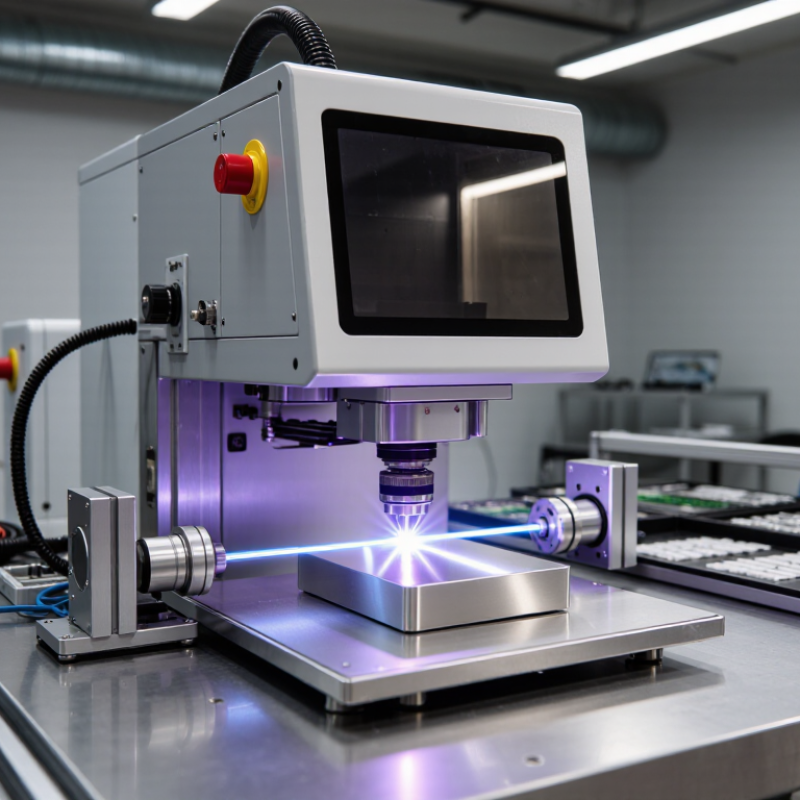
The machine contains a laser source, scanning mirrors, a focusing lens, and control software. The software converts a design into movement instructions. The mirrors guide the beam across the workpiece at high speed. The focused energy then changes the surface through engraving, discoloration, annealing, or controlled material removal. The result depends on laser power, pulse duration, speed, focus, and surface composition.
A practical setup begins with a clean, stable workpiece. Even a small focus error can make thin characters look blurred. Operators often test a sample before marking a full batch. That step prevents costly mistakes. Ventilation and protective enclosures are also important because some materials produce fumes or bright reflections. The process seems simple.
It is not always predictable. Different batches of the same material may react differently. Heat can also affect delicate parts, especially near edges. Careful calibration, documented settings, and routine lens inspection improve consistency. A skilled operator watches the mark closely rather than trusting software settings alone.
What Are the Main Components of a Laser Marker?
A laser marker machine creates permanent text, codes, and images by directing concentrated light onto a material. Its core component is the laser source. Fiber, CO2, and ultraviolet sources suit different surfaces and heat sensitivities. The power supply controls energy delivery. A cooling unit prevents unstable output during long production cycles.
The galvanometer scanner moves tiny mirrors at high speed. These mirrors guide the beam across the workpiece. An F-theta lens keeps the focused spot consistent across the marking field. The controller converts design files into scanning paths. Software sets speed, power, frequency, and hatch spacing. The worktable holds the part at a fixed distance. An enclosure and extraction system reduce exposure to fumes and scattered light.
Small details matter.
According to Fortune Business Insights’ 2024 Laser Marking Machine Market report, the global market reached about USD 3 billion in 2023. This growth reflects rising demand for traceable manufacturing. A 2023 industry analysis by MarketsandMarkets also identifies fiber systems as a leading segment. However, market figures vary by research method. That uncertainty deserves attention.
Tips: Test the material before production. A polished surface may reflect energy unexpectedly. Keep the lens clean and verify focus with a sample grid. Follow ISO 11553-1 guidance and use suitable interlocks. In practice, software settings often need adjustment. The first result is rarely perfect.
How Does the Laser Marking Process Work?
A laser marker machine uses a focused beam of light to change a material’s surface. The process begins with digital artwork, text, or a serial number. Software converts this information into a controlled scanning path. The operator then selects the material, marking speed, power, and pulse frequency. Small adjustments matter.
Inside the machine, a laser source produces concentrated energy. Mirrors guide the beam toward a focusing lens. The lens narrows the beam to a tiny point, often smaller than a grain of sand. When the beam reaches metal, plastic, glass, or coated surfaces, it creates a visible mark through heating, engraving, discoloration, or surface removal. The beam moves rapidly across the design using scanning mirrors. Each pass builds the final image line by line.
The correct settings depend on material thickness, color, coating, and heat sensitivity. For example, excessive power can melt plastic edges or leave a dark halo around fine text. Insufficient power may create a weak mark that fades during cleaning. In practical work, technicians test a small sample before production. They inspect contrast, depth, readability, and heat distortion. Ventilation and protective enclosures also require careful attention, because fumes and reflected laser energy can create serious hazards. Results are not always perfect on the first attempt. Surface variation, dust, and inaccurate focus can change the appearance, so process records and repeat testing remain valuable.
Which Materials Can Laser Markers Process?
A laser marker machine uses a focused light beam to change a surface without physical contact. It can remove a coating, darken a metal, or create a shallow engraving. The correct wavelength matters more than raw power. Fiber lasers commonly process stainless steel, aluminum, copper, brass, and titanium. They can produce sharp serial numbers on a metal housing within seconds.
Grand View Research’s 2024 Laser Marking Machine Market Report valued the global market at about USD 3.2 billion in 2023. Its findings also identify metal processing as a leading application area. That demand reflects traceability needs in automotive, electronics, and medical manufacturing. In practice, stainless steel often marks cleanly, while polished aluminum may need careful frequency control. Small settings matter.
Plastics require more testing. Some turn black, some become pale, and some melt around the mark. UV lasers suit many heat-sensitive plastics and thin films. CO2 lasers can mark glass, wood, paper, leather, and coated materials. Ceramics are possible, but their glaze and color strongly affect contrast. Painted metal is often marked by removing the top layer, revealing a contrasting base. I have seen identical plastic parts produce different results because of additives or surface moisture. That is easy to overlook. ISO 11553-1 also emphasizes controlled laser safety and machine guarding during processing. A sample test remains essential, even when a supplier’s material chart looks convincing.
What Is a Laser Marker Machine and How Does It Work?
Laser markers use a focused beam of light to permanently alter a material’s surface through engraving, annealing, discoloration, or ablation. The chart shows approximate melting or softening reference temperatures for common materials that can be processed by laser marking systems.
Material suitability: Metals such as aluminum, copper, brass, stainless steel, and titanium are commonly marked with fiber or other industrial lasers. Glass, ceramics, plastics, wood, and paper can also be processed, but they require suitable wavelengths, power levels, focus settings, and marking speeds. These temperatures are material reference values, not required laser operating temperatures.
What Are the Main Types and Applications of Laser Markers?
A laser marker machine uses a focused light beam to alter a surface without physical contact. Galvanometer mirrors guide the beam, while software controls speed, power, and pulse frequency. The correct settings create readable marks, not unwanted melting. In practice, material testing still matters more than a promising specification sheet.
The main types serve different materials and production needs. Fiber lasers work well on stainless steel, aluminum, tools, and electronic parts. CO2 lasers commonly mark wood, glass, paper, coated materials, and some plastics. UV lasers produce finer, lower-heat marks on sensitive plastics, films, and medical components. Green lasers can handle reflective or heat-sensitive materials, but they often require more careful process control. Diode systems suit lighter-duty work, although their results may vary across industrial surfaces.
Applications include serial numbers, barcodes, QR codes, logos, measurement scales, and traceability data. Automotive suppliers often mark engine parts and electrical connectors. Electronics manufacturers use fine identification codes on housings and circuit-related components. Packaging operations may add batch information to cartons or polymer films. MarketsandMarkets estimated the global laser marking market at about USD 3.0 billion in 2023, with growth toward USD 4.2 billion by 2028. Grand View Research also reports continued expansion, driven by automation and product tracking. These figures are useful, but forecasts are not guarantees. A practical trial should check contrast, permanence, cycle time, fumes, and readability after cleaning. Tiny text can fail. Sometimes, a slower pass delivers the more reliable mark.
Related Posts
-
China Top 10 Laser Marker Machine Manufacturers?
-
How to Choose the Best China Laser Marker Machine?
-
Top Laser Marker Machine Highlights at Canton Fair 2026?
-
2026 Best Marking Machine for Global Buyers to Consider?
-
What is the Best Dot Peen Marking Machine for Your Needs
-
2026 Top Hand Held Welding Machines for Global Buyers